
guide 03
Story or fire? A 3-minute triage loop for any ticker that hits your feed
Tickers on this page are teaching examples, not recommendations. TickerFluent publishes education, not investment advice.
Eleven browser tabs. That was my old answer when a name crossed my feed — investor relations, a chart site, a filings site, two news tabs, a free screener, whatever WhaleWisdom would show me without paying. Forty minutes later I knew a little about everything and not enough about anything, and the move I was checking on was over.
The question those forty minutes kept failing to answer is always the same one: story or fire? Somebody's excited, or it's down 12%, and I need to know if that's a narrative worth my attention or damage worth my exit. That's triage. Triage has a clock.
This is the loop I run instead. Seven commands, about three minutes, in Godel Terminal — the browser terminal I work in. (Free tier exists. Full seat is $118 a month. Now you know.) What the terminal changes is that every window looks at the same company at the same moment, so the picture assembles instead of scattering.
The loop is not the terminal, though. The reading order and the kill rules work on the free stack you already use — there's a box at the end mapping every window to the free version. Free takes me about twelve minutes across six sites. The terminal does it in three. Steal the loop either way.
I'll run it on NVDA — a liquidity choice, not an opinion — because you should
learn a loop on a name where every window is guaranteed to light up.
Running it in Godel? Backtick focuses the command line; the grammar is
TICKER EQ COMMAND(soNVDA EQ DES); Enter runs the highlighted row. That's all the plumbing you need. On the free stack? Skip this box — the reading is identical.
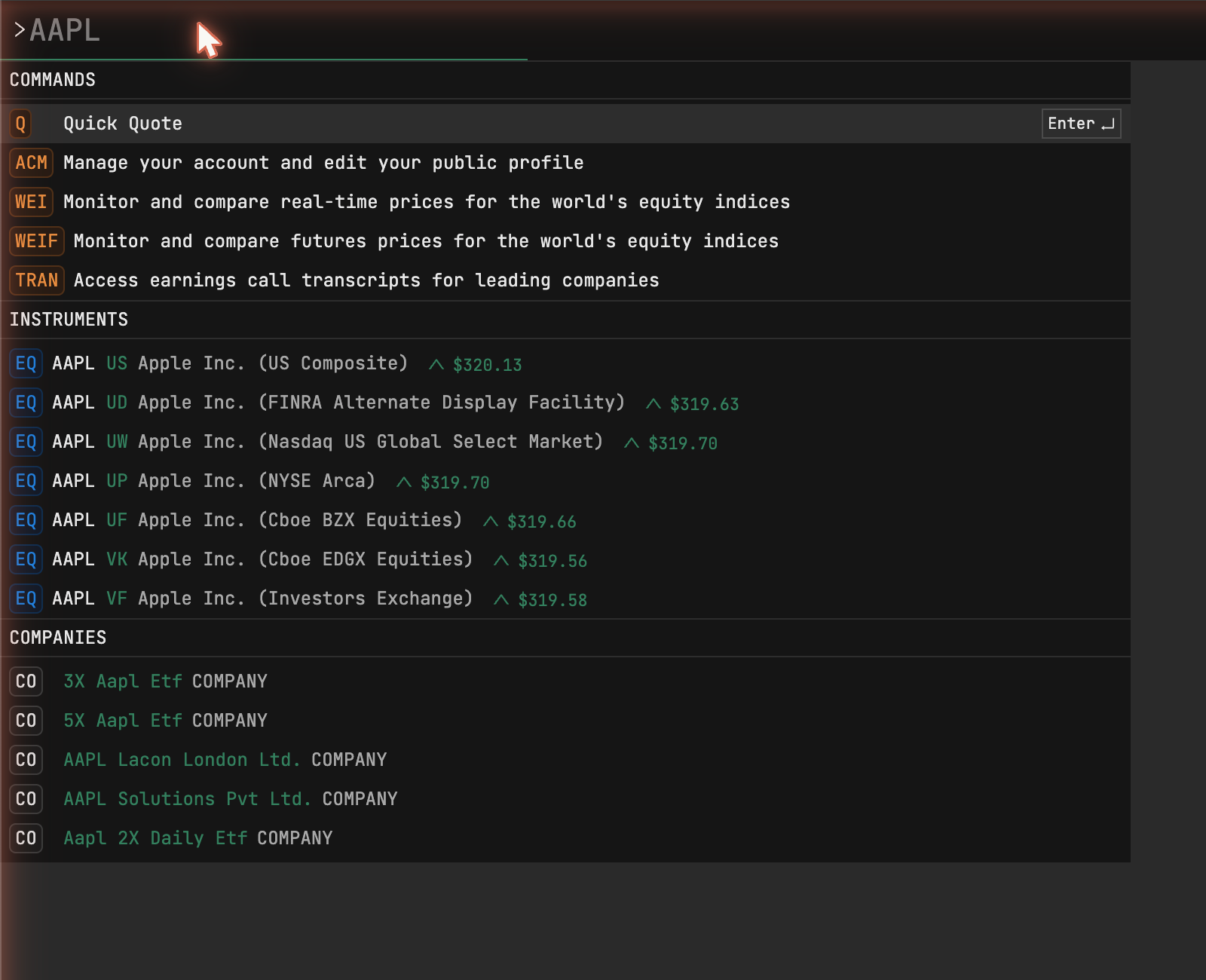
The loop, window by window
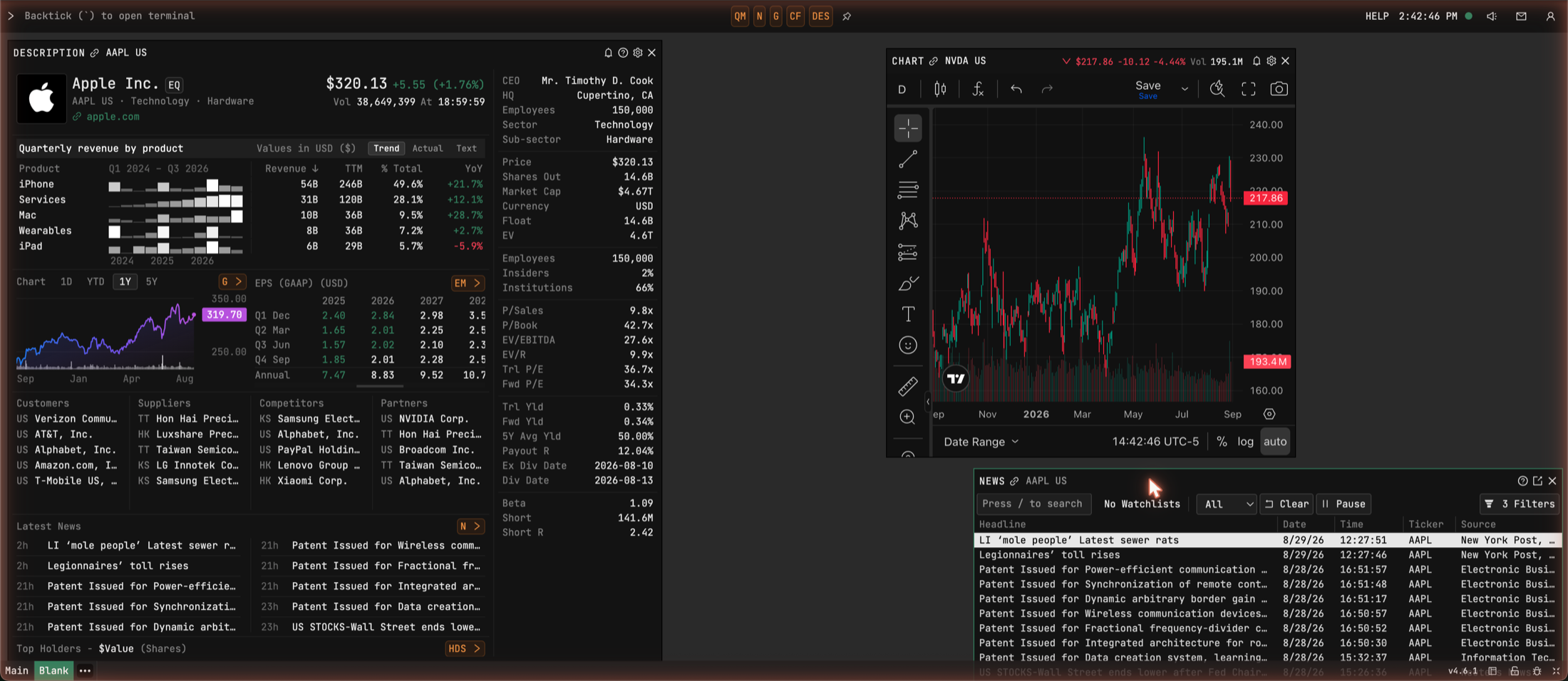
One: NVDA EQ DES — what is this thing? Skip the prose description. Read
the segment revenue table — descriptions are written to flatter, segment tables
get audited. The numbers lie less. Then the valuation strip, then the holders at
the bottom. Can't say what they sell in one sentence after this window? That's a
verdict. More below.
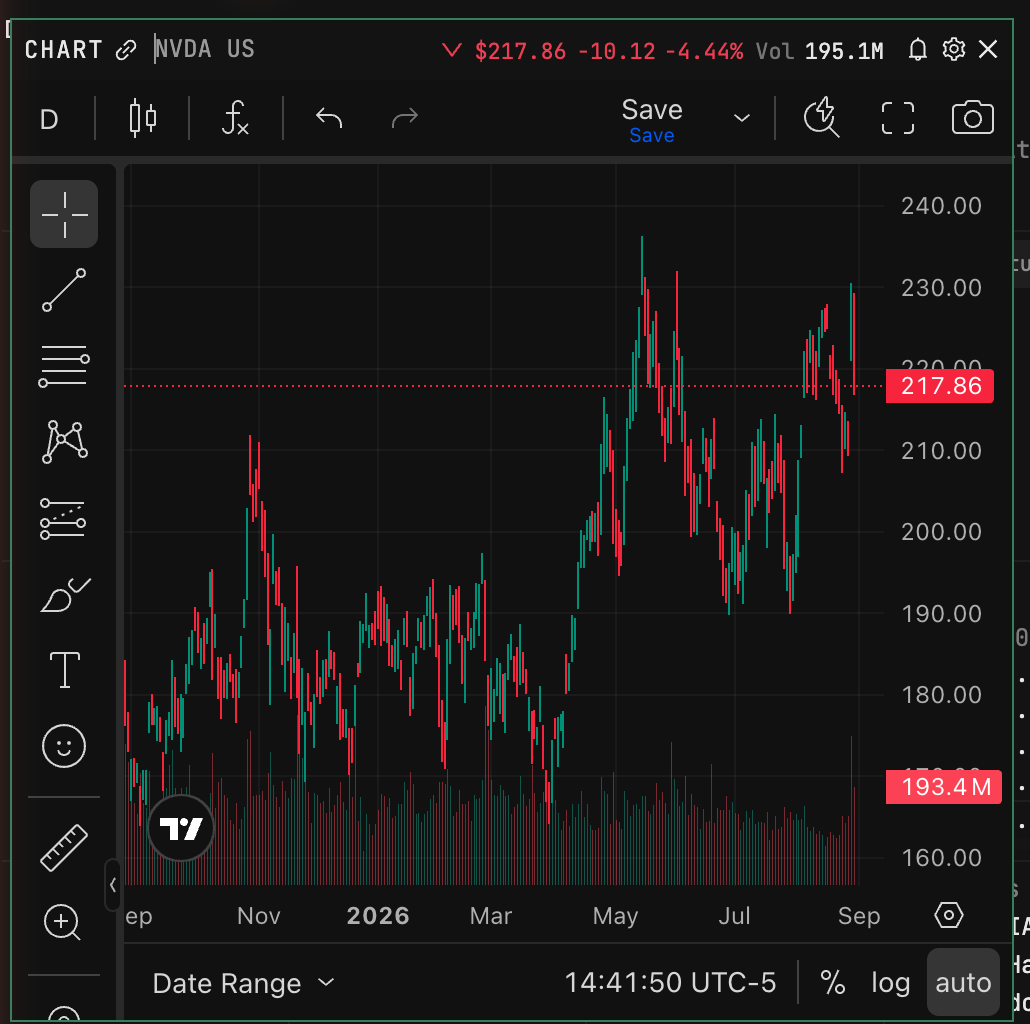
Two: NVDA EQ G — what happened while I wasn't watching? The chart runs on
the TradingView engine, so your habits transfer. No analysis yet. One year of
daily candles gives the move its shape before anyone's narrative does: is today's
candle an outlier or a continuation?
Three: NVDA EQ FA — do the statements back the story? Income, balance
sheet, cash flow, quarterly and annual. My pass: revenue trajectory, gross-margin
direction, and does cash flow agree with earnings. Disagreement between cash
flow and earnings is where stories hide. Works in both directions. Two quarters
of it and the name earns a longer sitting.
Four: NVDA EQ HDS — who's actually here? The 13F holder table, and on a
triage pass I read exactly one column: change — who added, who ran. A name held
by a couple of specialist funds at real size reads differently from one held by a
thousand indexers at index weight. Enter on any holder opens their original
filing. Ten seconds, next window.
Five: NVDA EQ N — what did it react to? The wire, scoped to the name. /
searches inside it; Pause freezes it while you read. I scan for three things:
anything from the company itself, anything with a number in the headline, and
anything the stock didn't react to. That third one is the non-reaction
read: a headline that should have moved the stock and didn't means the market
had it priced. No headline hands you that.
Six: NVDA EQ CF — the primary document. Filings straight from EDGAR,
rendered in-app. One rule: when a headline cites a filing, read the filing, not
the summary of it. On a triage pass this window is a ten-second check for an 8-K
the wire hasn't digested yet.
Seven: NVDA EQ OMON — what does the priced-in crowd think? The options
chain. Two free reads even if you never trade an option: implied volatility is
the market's own estimate of how much this thing moves, and a strike where volume
piles up shows you where the crowd is playing today. The options market is the
only crowd that puts numbers on its opinions.
That's DES, G, FA, HDS, N, CF, OMON. Run it enough and seven commands become one gesture. Now the clock.
The clock: what kills a name in 30 seconds
Three minutes only works if you're allowed to quit early. My kill rules, in order of how often they fire:
- The one-sentence test fails. DES segments are done and I still can't say what they sell. I'm not going to out-research a business I can't describe. It goes on the "read on a weekend" list, and the loop ends at window one.
- The catalyst is a promotion. The wire shows the move traces to a newsletter-tier source and nothing from the company, and volume is ordinary. Kill at window five, usually by minute one.
- The "discovery" is already priced. If the pitch is "this is about to move huge" and the options chain shows implied volatility already priced for huge, the market found it first. You're not early; you're the audience.
And one upgrade rule: segments changing shape (a new segment crossing ~10% of revenue), or the cash-flow-versus-earnings disagreement, buys the name a real sitting — the 10-K business section, not another lap of the loop.
When it's already down 12%
Reverse the order. On a live drop the question isn't "what is this company," it's "what broke, and is the broken thing the thing that mattered?"
N first: find the cause headline and check its timestamp. Today's news, or a
continuation? G second, twice — the name, then a peer beside it (AMD EQ G
next to your NVDA chart). If the whole sector is down, you're diagnosing a
different disease. Only then DES and FA, for the question that decides it:
fire is when the damage lands on the reason you'd own it. The growing
segment. The margin story. If the damage lands somewhere the segment table says
is small and the market sold the whole ticker anyway, that's not a fire.
In Godel, arrange the windows once — DES left, chart and wire right — link them, save the layout as its own tab, and the three-minute dive becomes a thirty-second one on every name after this.
The 12-minute version, without us
Promised above: the same loop on the free stack you already have. It works. It's just six sites instead of one screen, and nothing is looking at the same moment.
DES → the company's IR page + Yahoo Finance profile (what do they sell) · G → TradingView free (year of dailies) · FA → the latest 10-Q on EDGAR, cash flow vs earnings · HDS → WhaleWisdom's free view, change column · N → Yahoo Finance news for the name, sorted by time · CF → the company's filings page on EDGAR · OMON → your broker's options chain, IV and volume.
The kill rules work the same everywhere. Time yourself on both versions once. The stopwatch makes the buying decision, not me.
Two limits, stated plainly. The loop doesn't fix finding out late — it starts
when a name crosses your feed. I don't wait on my feed anymore; names cross a
watchlist wall instead, and that radar is its own
guide. And on Godel's free tier a couple of
windows are fenced: time-and-sales (TAS) and transcripts (TRAN) need a paid
seat. Everything in the loop above runs without them. US names stream real-time
on the Nasdaq feed; international listings run about fifteen minutes delayed and
wear a (D) badge.
The output of all this isn't an opinion on any one name. It's that "should I care?" costs three minutes now, so you can afford to ask it ten times a week instead of twice. Volume of looks is the edge. Feed the loop a better diet next: the screener that finds names worth three minutes.